ValkymIA: From an Engineer's Frustration to a Mission to Transform SMBs in Mexico
Why does Mexico have the most overworked labor force and the lowest productivity in the OECD? A Mexican engineer explains how ValkymIA was born to help SMB owners escape survival mode.
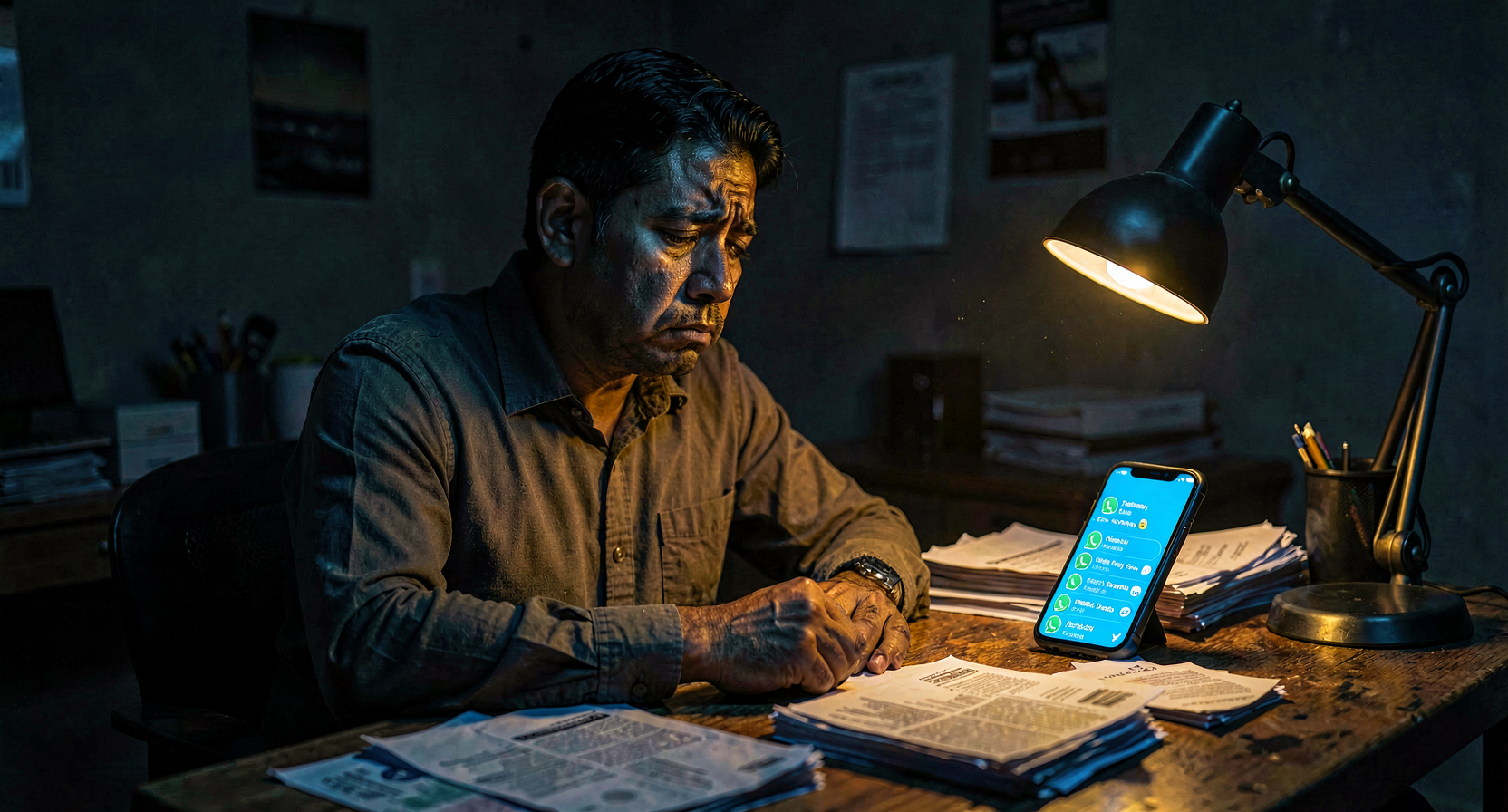
TL;DR: Mexico has the most overworked labor force and the lowest productivity in the OECD. The problem isn't a lack of effort — it's a lack of systems. ValkymIA was born to close that gap, from the reality of the Mexican SMB.
The Problem: More Work, Fewer Results
There's a statistic that should outrage any Mexican: according to the OECD, Mexico has the most overworked labor force among developed countries and, at the same time, the lowest productivity.
Read that again.
We work more hours than anyone. We produce less than everyone.
This isn't laziness. It's the exact opposite. It's a system that turns extraordinary effort into ordinary results. A trap where working harder doesn't get you ahead — it just keeps you in the same place, more exhausted.
And no one embodies this paradox like the Mexican SMB owner.
You know them. Maybe you are them. The entrepreneur who hasn't taken a real vacation in years. Who answers WhatsApp at midnight because if they don't, things fall apart. Who built something from nothing with sheer willpower and is now trapped by that very thing.
The one who works 14-hour days and, at the end of the year, looks at the numbers and wonders: why aren't we moving forward?
I saw this pattern up close. As a software engineer who has worked with both American and Mexican companies, I witnessed something that first frustrated me and then haunted me. The same amount of effort producing radically different results — depending on which side of the border you were on.
The question that wouldn't leave me alone: Why? And more importantly — what would it take to change it?

The Absurdity Gap: What I Saw with My Own Eyes
Working with American companies, I noticed something that seemed almost unfair.
Managers delegated tasks and those tasks got done. Correctly. Without endless follow-up. Owners took vacations and the business didn't collapse. Problems were solved with processes, not with someone's heroic all-nighter.
It wasn't that people were smarter or worked harder. Many times they worked less. The difference was invisible infrastructure: documented systems, clear roles, tools that communicated with each other.
Then I'd go back to working with a Mexican company — often more passionate, more resourceful, more willing to sacrifice — and I'd see a completely different pattern.
Stagnation. The same revenue ceiling hit year after year. A "good year" that somehow remained the high-water mark for the next fifteen. Growth that never compounded.
Employees quitting out of frustration — not because they didn't care, but because they did care. They saw problems, had ideas, wanted to contribute more than just following orders. But the dynamic was always boss versus employee, never a team pulling in the same direction.
The owner trapped in a fortress of their own making — trusting no one because delegation had failed before, micromanaging because "if I don't do it myself, it falls apart," and wondering why nobody stays.
This wasn't a talent gap. It wasn't a commitment gap. It was a systems and trust gap — and the cruelest part was that everyone involved wanted something better. The owner wanted to let go. The employees wanted to grow. But without the right structure, wanting wasn't enough.
I started asking: Why does it have to be this way?

The Root of the Problem: Why It's Not Their Fault
It would be convenient to blame culture. "Mexicans don't trust." "They don't want to change." "They're stuck in their ways." I've heard these dismissals — sometimes from consultants who failed, sometimes from the business owners themselves in moments of defeat.
But I saw something different.
I saw owners who desperately wanted to delegate but had been burned every time they tried. Employees who wanted to take responsibility but were never given the tools or the authority. Businesses stuck not because of stubbornness, but because of something more insidious.
Survival Mode
When margins are razor-thin and cash flow is unpredictable, there's no time to stop and build systems. Every hour goes to today's emergency: the angry client, the supplier who didn't deliver, the employee who quit without notice. Tomorrow's fire will be dealt with tomorrow.
Build a process? Document how things work? Train someone properly? That feels like a luxury when you're not sure you can make payroll.
So the owner keeps doing everything themselves — not because they want to, but because stopping to teach someone else feels like a risk they can't afford. The business survives another month. Nothing improves. The cycle repeats.
The Trap
This is the cruel logic of survival mode:
You can't build the ladder because you're too busy climbing.
And the longer it continues, the more it feels like the only option. The owner forgets that another way exists. The employees stop suggesting it.

The Bridge: Why My Position Is Unique
I'm not a management consultant. I didn't study business transformation in an MBA program. I'm a software engineer — someone who builds systems for a living.
And that turned out to be exactly the perspective needed.
Engineers think in processes. Inputs, outputs, dependencies, failure points. When I look at a business struggling to scale, I don't see a "culture problem" or a "leadership issue" — I see a system that was never designed for what it's being asked to do. A patchwork of improvised solutions held together by one person's willpower.
Why Having Seen Both Worlds Matters
Having worked with American companies, I saw what functional systems look like. Not because Americans are better, but because the tools, methodologies, and expectations were built for that context. Enterprise software, consulting frameworks, operational playbooks — all designed for companies with resources, scale, and English-speaking teams.
But I also understand why those solutions don't land in Mexico.
A $200,000 USD consulting engagement isn't accessible to an SMB. Software designed for 500-employee companies doesn't fit a team of 8. And advice delivered in Harvard Business Review frameworks doesn't resonate with someone who learned to do business by surviving, not studying.
The Gap I Decided to Fill
I realized: someone needs to translate. Take the principles that make delegation work, that allow systems to replace heroics, that transform boss-versus-employee into a team — and make them accessible, affordable, and actually fitting for the Mexican context.
Not imported solutions with a Spanish translation. Solutions built from this reality.
The Promise: What Becomes Possible
What does it look like when it works? When an owner finally exits survival mode?
It's not dramatic at first. It's small things.
A delegated task that actually gets done correctly, without follow-up. A week where the owner didn't answer a single WhatsApp after 7pm. A problem that was solved by someone else, using a process that existed before the crisis erupted.
Trust Built
The real transformation isn't in the tools or the dashboards. It's in the moment when an owner realizes: I don't have to do this myself.
Not because they've given up control, but because they've built something that deserves their trust. A team that knows what's expected of them. Processes that don't live only in the owner's head. Systems that catch problems before they become emergencies.
Delegation stops being a leap of faith and starts being how things work.
What Changes After
When trust is built, everything else follows. Employees stop quitting because they finally have room to grow and a reason to stay. The dynamic shifts from boss-versus-worker to a team with shared interests. Growth stops being scary because more clients doesn't mean more personal sacrifice.
And the owner? They get back something they'd forgotten was possible: time to think. Time to work on the business instead of drowning inside it. Maybe even a weekend that actually feels like a weekend.
This Isn't Fantasy
It's what happens when survival mode ends and building mode begins.
If this resonates with you, you don't have to keep navigating alone. Learn how ValkymIA can help your business escape survival mode →

The Founding of ValkymIA: Why This Exists
ValkymIA didn't start with a business plan. It started with a question that wouldn't leave me alone: What if the owners I saw struggling had a way out?
Not a way out that requires $200,000 in consulting fees. Not software that assumes they have an IT department. Not advice that works "in theory" but ignores the reality of making payroll with three employees and a prayer.
A way out built for them. For the SMB owner who knows something needs to change but can't afford to stop and figure out what. For the entrepreneur who has tried delegating before and got burned. For the business that has been "about to grow" for a decade.
The Name
ValkymIA combines two ideas. The Valkyrie — the Norse figure who selects the worthy and guides them toward something greater. And alchemy — the ancient art of transmutation, turning lead into gold.
This isn't poetic accident. It's the mission: select the businesses ready to change, and transmute their chaos into order. Their survival mode into building mode. Their isolation into trust.
What We Actually Do
We don't sell software. We don't deliver a report and disappear. We train teams while implementing systems — so that when we leave, the capability stays. We use technology as a tool, not as a product. And we build everything from the reality of the Mexican SMB outward, not the other way around.
Empowerment, not dependency. That's the line we refuse to cross.
The Real Cost and the Possibility
Every month that survival mode continues, the cost compounds. Not just in revenue that stagnates or employees who leave — but in the years the owner doesn't get back. The missed dinners. The ignored health. The slow erosion of believing things could be different.
This isn't about productivity metrics. It's about lives.
The Possibility
The gap between Mexican SMBs and their potential isn't destiny. It isn't culture. It isn't some permanent disadvantage. It's a systems problem — and systems problems have solutions.
The same owner who today can't take a weekend off could, with the right structure, build something that works without them being in the room. The same team that feels like adversaries could become collaborators. The same business that's been stuck for fifteen years could finally grow.
It requires breaking the cycle. Stopping long enough to build the ladder instead of just climbing. And having a guide who understands both what's possible and what's real.
The Invitation
If you recognize yourself in this article — the midnight WhatsApp, the delegation that never works, the good year that never repeats — know that it doesn't have to stay this way.
Not through magic. Not by working even harder. By building, finally, the systems that let your effort translate into results.
That's the transformation ValkymIA exists to catalyze.
Discover ValkymIA and take the first step →
About the Author
César Valadez is a software engineer and founder of ValkymIA. After working with companies in the United States and Mexico, he founded ValkymIA to close the productivity gap he saw firsthand — not by importing solutions, but by building them from the reality of the Mexican SMB.